

Liquid monomer affects how acrylic behaves from the first bead to the final file. It influences pickup, setting speed, odor, flexibility, clarity, and control while building the nail. For nail professionals and skilled DIY users, knowing the difference between formulas makes product selection easier and helps you avoid avoidable application issues.
This article will explore different liquid monomer formulas used across acrylic and light-cured nail systems. The goal is not to make every formula sound interchangeable. It is to clarify where these different formulas fit within professional acrylic nail supplies.
Start With What Liquid Monomer Does
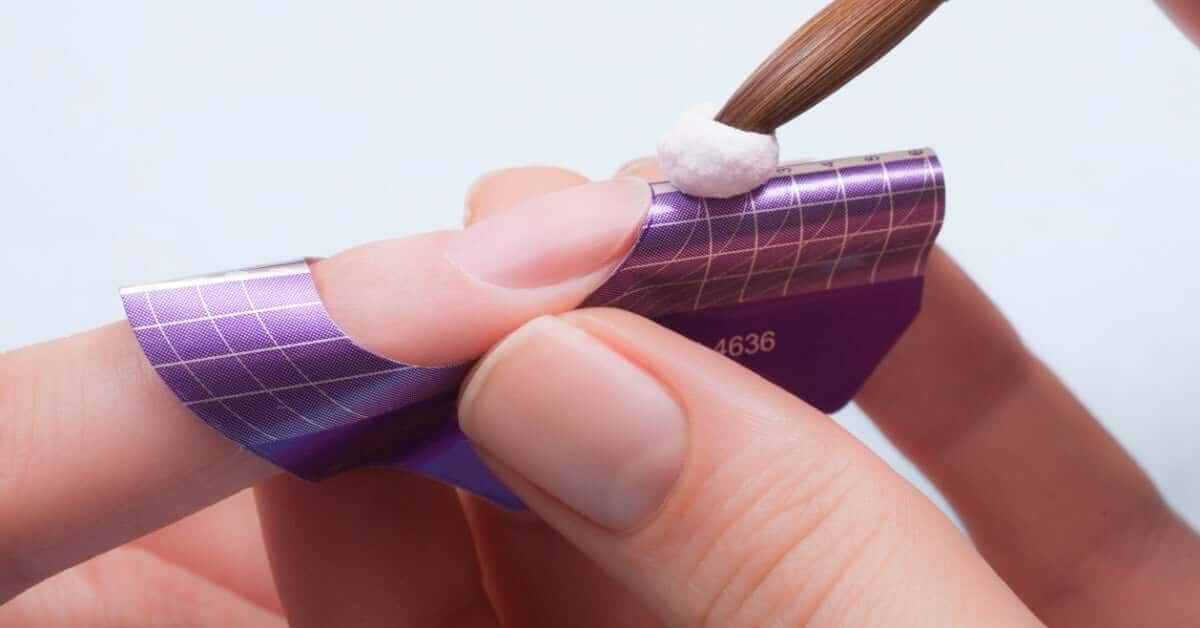
Traditional acrylic systems work through a reaction between liquid monomer and acrylic powder. When the brush picks up liquid and contacts powder, the ingredients form a workable bead. That bead stays moldable briefly before it begins to set.
The formula controls how that bead feels. Some liquids set faster, while others give more working time. Technique still matters—monomer cannot correct poor liquid-to-powder ratio, contaminated powder, or rushed placement. However, monomer choice can inform your technique as you work.
Using EMA as the Professional Acrylic Standard
EMA stands for ethyl methacrylate. In acrylic nail systems, EMA-based monomer is widely used because it creates a durable enhancement while still offering workable flexibility during application and removal. It supports bead control, predictable setting, and professional acrylic structure when paired with compatible powders.
An EMA-based liquid works well for overlays, tip-and-overlay sets, sculpted extensions, fills, and repairs.
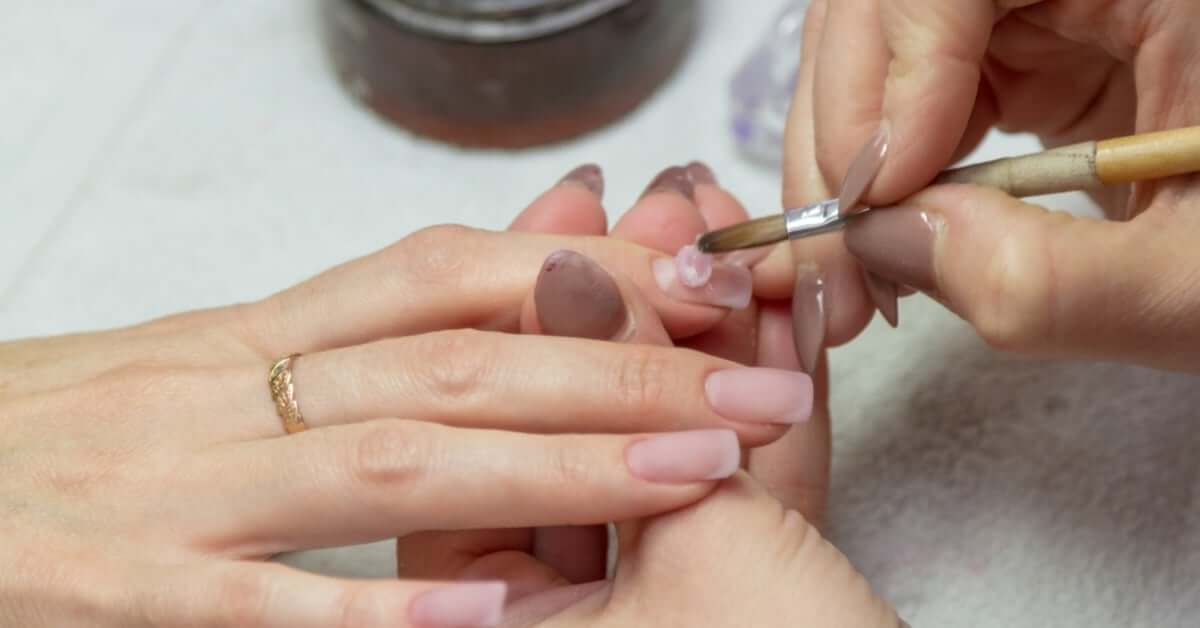
Good EMA handling still depends on controlled ratios. If the bead is too wet, it can run into the sidewalls or cuticle area. If it is too dry, it may set before the product can smooth into place. A proper bead should stay cohesive on the brush, release cleanly, and respond to light pressure without flooding.
Understand Low-Odor and Odor-Reduced Options
Low-odor monomers reduce the strong acrylic smell that appears during application. They can be useful in shops and studios where odor control is a priority.
These formulas often behave differently from standard EMA liquids. Some set more slowly, feel stickier during application, or require a slightly different liquid-to-powder ratio. Treat low-odor formulas as their own category rather than a direct swap.
Reduced odor does not mean reduced exposure. Keep lids closed, use proper ventilation, and avoid skin contact with uncured liquid.
How Monomers With Fragrances Differ
Some monomers also include added fragrance to create a more pleasant working environment during acrylic application. Scented formulas are still professional monomers and should be treated with the same handling standards as traditional liquids. The added scent does not change the need for ventilation, proper storage, or controlled handling during services.
Know Where UV LED-Cured Formulas Fit
You may see the word “monomer” associated with some UV LED products because monomers are part of many nail product formulas at a chemical level. However, UV LED systems do not use traditional liquid monomer the way acrylic liquid-and-powder systems do. These systems can both create structure and length, but they work very differently during application.
Traditional acrylic systems use liquid monomer and acrylic powder together to form a bead that begins setting immediately. Meanwhile, UV LED-cured systems stay workable until cured under the proper lamp.
This changes how the product handles during the service. Acrylic requires steady bead control and faster placement because the product continuously sets while you work. UV LED-cured products give you more time to adjust placement and refine structure before curing.
Some hybrid products combine features from both acrylic and gel systems, which is why these categories often overlap while shopping for acrylic nail supplies. Instead of focusing only on product labels, pay attention to how the system cures, how long it stays workable, and how it fits your application style.
Compare Setting Speeds Before Choosing a Liquid
Setting speed affects workflow more than many users expect. A fast-set monomer works well for experienced technicians who move quickly and want less waiting before filing. It can support faster salon timing during fills and basic overlay work.
A medium-set formula gives more time to place product across the nail. It works well for controlled cuticle placement, longer extensions, and users still refining bead consistency. Slower formulas can feel easier during warm conditions or detailed sculpting, but they may extend application time.
If the monomer isn’t performing in a way you expect, adjust bead size, product ratio, and placement speed before assuming the formula is the problem.
Match Monomer to Powder Compatibility
Acrylic systems perform best when the liquid and powder are designed to work together. Mixing random liquids and powders can change bead texture, color clarity, set time, and adhesion. A compatible system gives more predictable results.
With the right monomer, the bead should pick up smoothly, stay workable, and cure to a stable finish without excessive bubbling, marbling, or crystallization. If the product looks grainy, cures unevenly, or lifts repeatedly, review compatibility before changing your entire technique.

Choose Formulas Based on the Service
Liquid monomer selection should match the service, not just personal preference.
For most salon acrylic work, an EMA-based liquid paired with a compatible powder provides a reliable foundation. For slower sculpting or training, a medium-set or slower-set liquid can create more control. And for environments where odor control is a priority, an odor-reduced option can be practical.
Handle Every Formula Safely
All monomer formulas require careful handling. Avoid skin contact, keep containers closed when not in use, and work in a ventilated space.
Do not pour used liquid back into the original bottle. Once monomer is poured into a dappen dish, it can collect powder residue, dust, pigment, or product debris. Returning it to the bottle can affect the full supply.
Keep monomer away from direct sunlight, heat, and open flame. If the liquid changes smell, color, or behavior, replace it instead of forcing it into a service.
Build Better Results With the Right Acrylic System
Choosing a monomer is not just a chemistry decision. It changes how the bead moves, how long you can work, how the product files, and how the finished enhancement wears.
When you explore different liquid monomer formulas, focus on compatibility, handling, setting speed, odor control, and removal. These details make it easier to choose acrylic nail supplies that support your technique instead of working against it.
At Mia Secret, we offer acrylic systems, gel systems, and professional nail products designed for controlled application and consistent salon use. Explore our products to build a complete supply setup that supports the way you work.